

Why Fix What Wasn’t Broken?
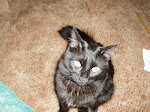
An Angora rabbit interrupts an autistic child’s self-destructive behavior by pressing up against the boy’s chest and pawing his arms. The child reaches for the silky fur and calms himself. A pot-bellied pig senses that her diabetic owner’s blood sugar levels are dangerously high. After nudging the woman toward the easy chair, a signal that a blood test is needed, the pig retrieves a diabetic kit from the refrigerator. A cat comes running when his owner cries out in pain and drapes himself across the afflicted limb. Before Attorney General Eric Holder signed the new Americans with Disabilities Act (ADA) revisions on July 23, 2010, these animals would be called service animals.
According to a U.S. Department of Justice fact sheet, under the old rules, the ADA “defines a service animal as any guide dog, signal dog or other animal individually trained to provide assistance to an individual with a disability.” The act also says that service animals have to know what to do when either a command is given, or there is a triggering event such as their owner crying in pain or becoming non-responsive. They must help with physical, psychological and psychiatric disabilities. However, their use for comfort or emotional aid is excluded. In other words, the cat that lies on your lap would not be a service animal, while the cat that comes to lie on a leg to ease neuropathic pain would be, as long as that is what it is trained to do and it can consistently do its task.
Although many species of animals have been trained to help their owners be more independent, and even to save their lives, the new rules are clear that they are no longer service animals. In the new ADA ruling that now says “service animal means any dog that is individually trained,” the wording that previously allowed for other animals has been removed. An exception is made for miniature horses, but although they are granted the same access as service dogs, they are not considered to be service animals. According to the ADA, this ruling was made to eliminate confusion. However, many are confused about what a service animal is, even when it is a dog.
My mother was refused entry into Fry’s Shopping Center when she tried to shop using her brace dog Jasper (a brace dog helps steady a person on their feet and helps them to stand up). Even though Jasper was wearing a working harness, my mother was not blind, so the store manager believed she had no right to use her dog. He demanded registration paperwork, asked how she was disabled, and wanted to know who trained her dog. He then told her that because my sister was with her, my sister could assist her and therefore the dog was not needed. Nothing my sister or mother said could make him believe that he was in violation of the ADA, and he would not read the ADA rules my sister handed him. Like many others, he believed that a service dog is a guide dog for the blind, and has to be a German Shepherd, Labrador, or Golden Retriever, trained by a professional group and certified. Despite the fact that the ADA has always made it clear that there are no size or breed limitations, owners may train the dog themselves and there is no certification process, many of the disabled are wrongfully denied access or service. If store chains as large as Fry’s are confused about what kinds of service dogs are allowed, it doesn’t seem likely they would be less confused when they are required to also allow a miniature horse inside their stores.
It is puzzling why miniature horses are allowed access along with dogs, and the reasoning is not explained. Typically, these little horses are trained as guide animals for the blind, or as brace animals that help people walk or stand. They have turned out to be very suitable for their work, are easy to housebreak and are a viable alternative for people allergic to dogs, so it makes no sense to exclude them, but neither does it make sense to exclude other animals that excel in their work. The reason given for the ruling was to eliminate confusion, but to do that, the ADA should only allow certain breeds of dogs, trained by experts, with documentation and wearing a vest or special tag. None of that is required, and allowing miniature horses cannot do anything but cause more confusion.
Wouldn’t it just be easier to rule that any trainable animal can be a service animal?
Beyond the confusion, though, is the discrimination against disabled persons this rule brings about. Many people have spent considerable money, time and love training their helpers. Training and maintaining a service animal is not cheap when trained professionally, and if you go it alone, you still have the expense of purchasing the animal, the equipment and often the training materials. It takes years for most animals to learn enough to be a good helper. In the case of a large dog it is about half their lifespan. With many of the disabled, during those years of training their own health and strength may have declined to the point where they cannot train another helper. This may make them dependent on human care, which takes away their independence and is costly. Some may choose to struggle along on their own, but paraplegics without their Capuchin monkey helpers will lose the most. The monkeys are able to clean and cook for their charges, help them eat, brush their hair and teeth and have saved lives. How is a horse or dog supposed to run a microwave or spoon feed a person? Yet monkeys are specifically excluded as service animals.
Helping Hands, the largest organization training Capuchin monkeys, does not encourage the monkeys to be used in public because they can be quite shy. It is true that Housing and Urban Development (HUD) and Federal Housing Administration (FHA) rules should protect the handicapped from losing their helpers. Under HUD rules, the definition of assistance animals allows a broader interpretation of what an assistance animal is and the FHA does not define them at all. So if no one intends to take their monkey shopping or to a movie, and landlords cannot charge pet fees or evict a handicapped tenant that has a furry caretaker, one might ask what difference can changing the rule to exclude them as service animals make? Without the force of protection by the ADA, helper monkeys are just exotic animals which cannot be shipped across state lines. States and cities can also ban the ownership and use of the Capuchins, and can confiscate and remove the monkey from the home without violating HUD or FHA rules. Further, the HUD and FHA rules may not protect a disabled person, even if all that is owned is something as common as a cat. In an analysis by Rebecca J. Huss of the Pepperdine School of Law, she notes that “the case law in this area is complicated by the fact that the language of the ADA regulations is often used and state courts are asked to interpret federal law. This leads to inconsistency in the decisions and confusion over what standard should be applied.” The new rules will increase this confusion, not reduce it.
There are many animals who have served well for many years, and sometimes they are the best animal for the situation. People with neuropathic pain have found that having an animal drape itself across the site of pain is the best pain relief, and nothing drapes better than a cat. Pot-bellied pigs have an excellent sense of smell and have been used to let diabetics know when their sugar levels are too high or low. They are also exceptionally smart and are better able to figure out what to do even without specific training in new situations. A dog can be trained to call 911, but what if there is no phone handy and he hasn’t been taught a backup plan? In that case, the dog will probably lie down and wait for directions. A pig will go and find help. One pig even stopped traffic to get help for his owner. Monkeys use their hands to care for their charges. Even rabbits have their place. They are easily trained to distract autistic children, who are also comforted by their tactile aspect and their tendency to be affectionate without being demanding. These children are often very specific about what animal works for them. If they want a bunny, only a bunny will do.
Another problem with the ruling is that no clarity was given to the definition of comfort or emotional aid, but service animals are excluded for that use. People with psychological or psychiatric disabilities are allowed to train an animal for their use. That makes for more questions. Does the trained dog of a clinically depressed person qualify as a service animal? It seems that the answer is yes, if the dog is trained to ground the person to reality, but not if it is only trained to comfort the person when depressed. What is the difference? How do you define the difference?
Finally, there is no leeway for people with allergies to grass, and fear of dogs. This is not an unusual combination. Grass is a very common allergy, and horse feed is comprised of types of grass and grains. Many people are terrified of dogs of all types, big or little. Phobias should not be dismissed lightly. Even if a phobic person decided to get a dog to replace the beloved cat that kept that person from committing suicide, the chances of a life-saving bond being formed are slim.
The ADA needs to reconsider this discriminatory ruling. There are too many people that are adversely affected, and too many loving animals that have dedicated their lives to service may be have to be given up or even killed. With this ruling, the disabled may lose the ability to be self-sufficient, live by themselves, or even stay out of a care facility. When the disabled lose the right to choose what service animal works best for them, they lose more than just a simple helper. They lose their autonomy.
Huss, Rebecca J., “Why Context Matters: Defining Service Animals Under Federal Law” Pepperdine Law Review, Vol. 37 (5 Feb. 2010): 1163. Web. 28 Nov. 2010Valparaiso University Legal Studies Research Paper No. 10-02.
United States Department of Justice. “Commonly Asked Questions About Service Animals in Places of Business.” 14 Jan. 2008.Web 29 Nov. 2010. <http://www.ada.gov/qasrvc.htm>
United States Department of Justice. “Fact Sheet—Highlights of the Final Rule to Amend the Department of Justice’s Regulation Implementing Title II of the ADA.” 7 Oct. 2010.Web 27 Nov. 2010.
Huss, Rebecca J., “Why Context Matters: Defining Service Animals Under Federal Law” Pepperdine Law Review, Vol. 37 (5 Feb. 2010): 1163. Web. 28 Nov. 2010Valparaiso University Legal Studies Research Paper No. 10-02.


 Posts
Posts

